
#16 The Dollar’s Long Goodbye
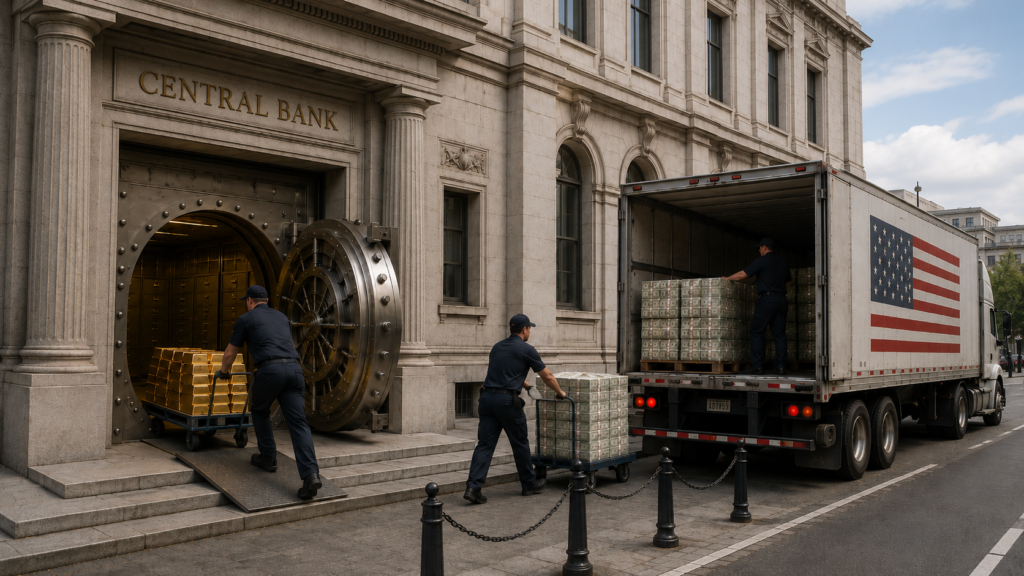
The Dollar’s Long Goodbye. Gold needs no dollar collapse, only a world that trusts American promises a little less. In August 1971, Richard Nixon appeared on American television on a Sunday evening and told the country he was temporarily suspending the dollar’s convertibility into gold. The language was deliberately reassuring. There would be no great monetary rupture, merely a technical adjustment designed to protect the dollar from international speculators. The temporary suspension never ended. Foreign governments holding dollars could no longer exchange them for American gold. The Bretton Woods monetary system effectively died that evening, although the dollar survived and eventually became more dominant than before. What disappeared was the constraint beneath it. Money had become a promise backed primarily by confidence in the United States. More than half a century later, that promise remains the foundation of global finance. Yet the behaviour of governments suggests they are becoming less comfortable relying upon it indefinitely. Central banks have been accumulating gold at historically elevated rates. China has spent years reducing its relative exposure to US Treasuries while increasing its official gold reserves. BRICS governments openly discuss conducting more trade outside the dollar. Across emerging markets, the question is no longer whether the dollar disappears tomorrow. It is whether a monetary system built overwhelmingly around one country’s liabilities still makes sense in a world becoming progressively less American. Ray Dalio has spent years arguing that these moments are not unusual. They are cyclical. And America is entering the uncomfortable part.