
#18 The Ounces Between Gold and Silver
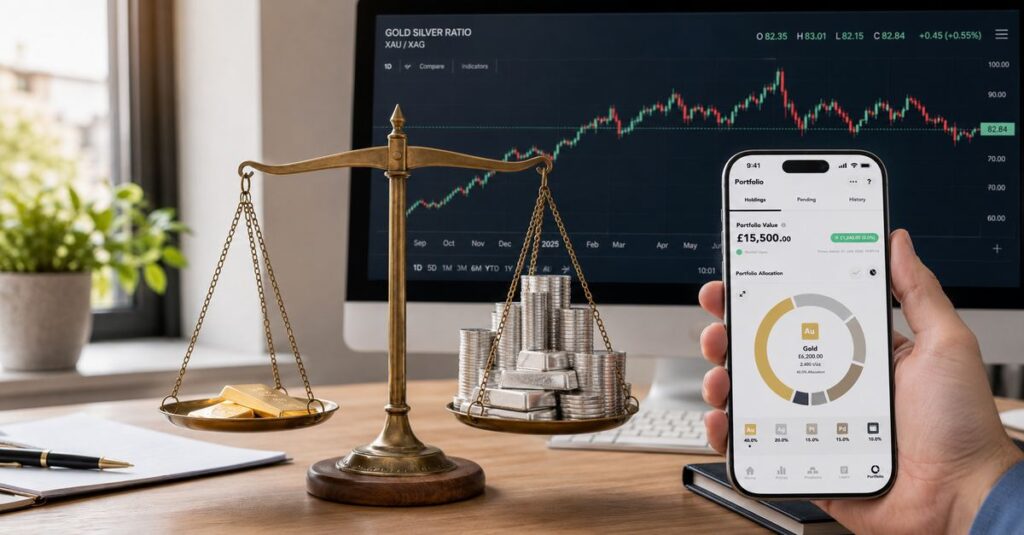
How movements in one of the oldest ratios in finance can potentially turn the same capital into more gold. Imagine two investors beginning with exactly the same thing: ten ounces of gold. The first puts his gold away and forgets about it. Twenty years later, he still owns ten ounces. The price may have risen considerably, but measured in gold, nothing has changed. The second watches the relationship between gold and silver. Gold becomes unusually expensive relative to silver, he exchanges part of his gold for silver. Years later, when silver has become expensive relative to gold, he switches back. Suppose the first exchange happens at a gold-silver ratio of 100 and the second at 50. Ten ounces of gold become 1,000 ounces of silver. Those 1,000 ounces later buy twenty ounces of gold. Both investors started with ten ounces. Neither contributed another pound. One still owns ten. The other owns twenty. There are transaction costs, taxes and the much harder problem of recognising the turning points. Markets rarely give examples this cleanly. But the math is useful. For an investor accumulating precious metals, wealth does not always have to be measured in currency. It can also be measured in ounces.