
#20 Bring the Gold Home

Europe’s central banks are reconsidering where their ultimate reserve asset should sit. In 1963, France began quietly emptying its gold from foreign vaults. The operation carried the appropriately French codename Vide-Gousset, roughly translated as “empty pockets”. Gold left New York aboard ocean liners. Bullion stored in London followed by aircraft. The operation stretched across several years because De Gaulle was doing more than moving metal between vaults. He was reducing France’s dependence on a monetary system he no longer entirely trusted. De Gaulle, guided by economist Jacques Rueff, had become suspicious of the arrangement created at Bretton Woods. The dollar was supposedly as good as gold, convertible by foreign central banks at $35 an ounce. Yet America could issue the reserve currency required by the rest of the world while running persistent deficits of its own.
#19 De-Dollarisation in Motion
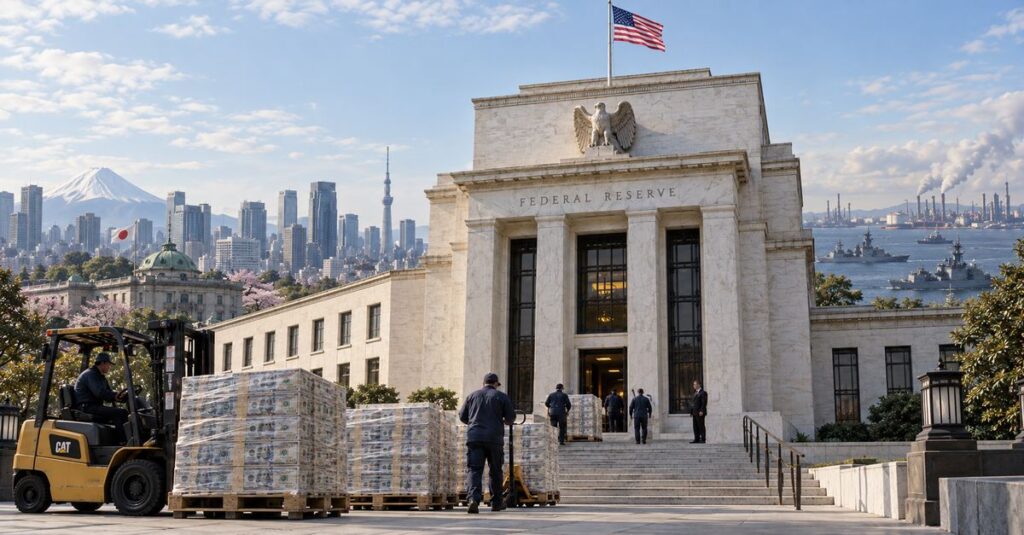
Washington is fighting across military, energy and financial fronts. The cost is beginning to appear where it matters most. In February 2022, Russia discovered that a foreign-exchange reserve is only as sovereign as the system holding it. For years, Moscow had accumulated hundreds of billions of dollars in reserves, partly as protection against financial pressure from the West. When Russian forces entered Ukraine, the United States and its allies froze a large portion of those assets.
For central banks elsewhere, the freezing of those reserves established a precedent that extended beyond Russia. A country could spend decades earning foreign currency, running trade surpluses and accumulating reserves, only to discover during a geopolitical confrontation that access to part of those savings depended upon decisions made in Washington, Brussels and other Western capitals.
For China, Saudi Arabia and other large reserve holders, the episode made the political conditions attached to foreign reserves considerably harder to ignore. Central banks continued accumulating gold while governments experimented with local-currency trade and payment systems requiring less Western financial infrastructure. Freezing Russia’s reserves demonstrated the reach of American financial power while giving other governments a reason to reduce their exposure to it. Four years later, Washington is applying the same financial leverage more aggressively against Iran. Scott Bessent is threatening to exclude institutions financing Tehran from the dollar system while America fights a Middle Eastern war, searches for petroleum in Venezuela and watches Japanese bond yields climb towards levels unseen for decades. At home, strategic reserves are being consumed while Treasury yields remain stubbornly high. There is nothing unusual about finding a separate explanation for each event. The pattern becomes harder to dismiss when they begin occurring at the same time.
Over the past few weeks, we have followed several of these pressures separately. What is becoming clearer is how quickly they are beginning to collide. This is what de-dollarisation looks like in motion.
#18 The Ounces Between Gold and Silver
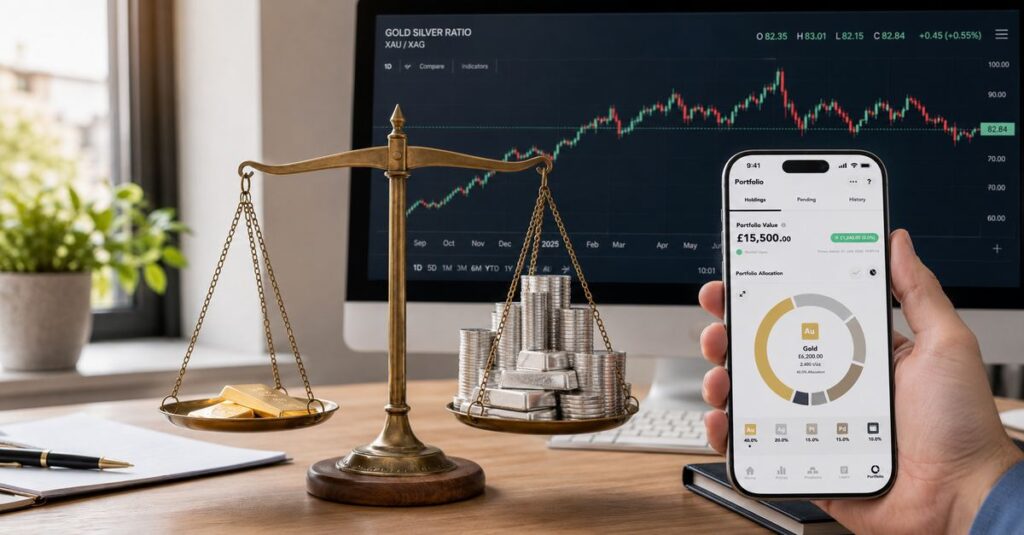
How movements in one of the oldest ratios in finance can potentially turn the same capital into more gold. Imagine two investors beginning with exactly the same thing: ten ounces of gold. The first puts his gold away and forgets about it. Twenty years later, he still owns ten ounces. The price may have risen considerably, but measured in gold, nothing has changed. The second watches the relationship between gold and silver. Gold becomes unusually expensive relative to silver, he exchanges part of his gold for silver. Years later, when silver has become expensive relative to gold, he switches back. Suppose the first exchange happens at a gold-silver ratio of 100 and the second at 50. Ten ounces of gold become 1,000 ounces of silver. Those 1,000 ounces later buy twenty ounces of gold. Both investors started with ten ounces. Neither contributed another pound. One still owns ten. The other owns twenty. There are transaction costs, taxes and the much harder problem of recognising the turning points. Markets rarely give examples this cleanly. But the math is useful. For an investor accumulating precious metals, wealth does not always have to be measured in currency. It can also be measured in ounces.
#13 The Weight of the Digital Economy

The market is focused on who will build the future. It is paying far less attention to what the future will be built from. In March 2021, the Ever Given became lodged across the Suez Canal, blocking one of the world’s most important shipping routes. For six days, hundreds of vessels carrying crude oil, LNG, semiconductors and consumer goods accumulated at either end of the canal. Global supply chains slowed. Commodity prices moved. Manufacturers recalculated inventories. A single ship briefly became one of the world’s most important macroeconomic variables. The lesson extended well beyond maritime logistics. Modern economies are not usually constrained by their largest industries. They are constrained by the narrow points through which those industries must all pass. Those bottlenecks often attract remarkably little attention until they fail. Artificial intelligence, semiconductors, hyperscale data centres, solar power and electric vehicles are generally analysed as separate investment themes, each with its own forecasts, valuations and specialist research. Yet they increasingly depend upon the same industrial foundation. Every one requires reliable electrical transmission. Every one depends upon increasingly sophisticated electronic systems. Every one ultimately draws upon a surprisingly small group of materials whose physical properties remain exceptionally difficult to substitute. Technology has advanced rapidly. The periodic table has not.