
#9 The Bond Market Smelt Blood
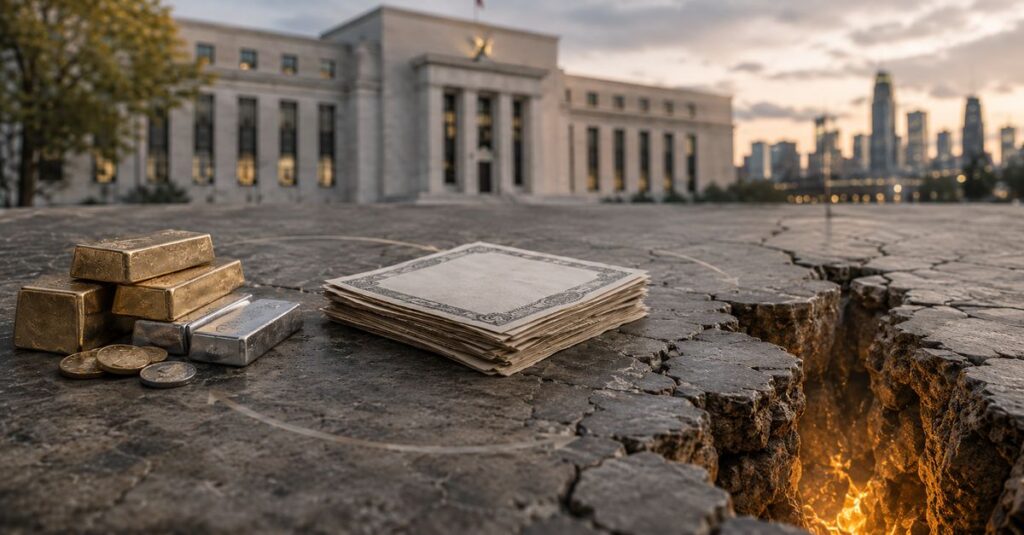
One jobs report was enough to shake precious metals. It was not enough to change the arithmetic underneath the system. After the San Francisco earthquake of 1906, investors did something peculiar. Shares in several fire insurance companies were dumped before the damage had even been properly assessed. The logic seemed obvious enough from a trading desk. Claims would rise. Profits would fall. Uncertainty would spread. Nobody wanted to sit around holding the equity of an insurer while an entire city was still smouldering. What the market missed was the irony sitting in plain sight. The disaster had not made insurance less valuable. It reminded everyone why insurance existed. Markets have a habit of repeating this mistake. They become so preoccupied with the immediate cost of protection that they forget the reason they bought it in the first place. That thought lingered throughout last week’s gold and silver sell-off. A stronger-than-expected jobs report arrived first. Then came the 4.2% inflation print. Treasury yields climbed, the dollar caught a bid, and precious metals were marked down with almost mechanical efficiency. Gold fell. Silver, as it so often does when liquidity tightens, fell harder. By Monday morning, the explanation had already been filed away neatly: higher-for-longer rates, resilient growth, stronger dollar, bad for metals. The explanation was not wrong. Just incomplete. Investors spent the week selling inflation protection immediately after being reminded that inflation remains well above where policymakers claim it should be. That contradiction tells us more about the market’s reflexes than it does about the long-term case for gold or silver.
#8 A New Centre of Gravity
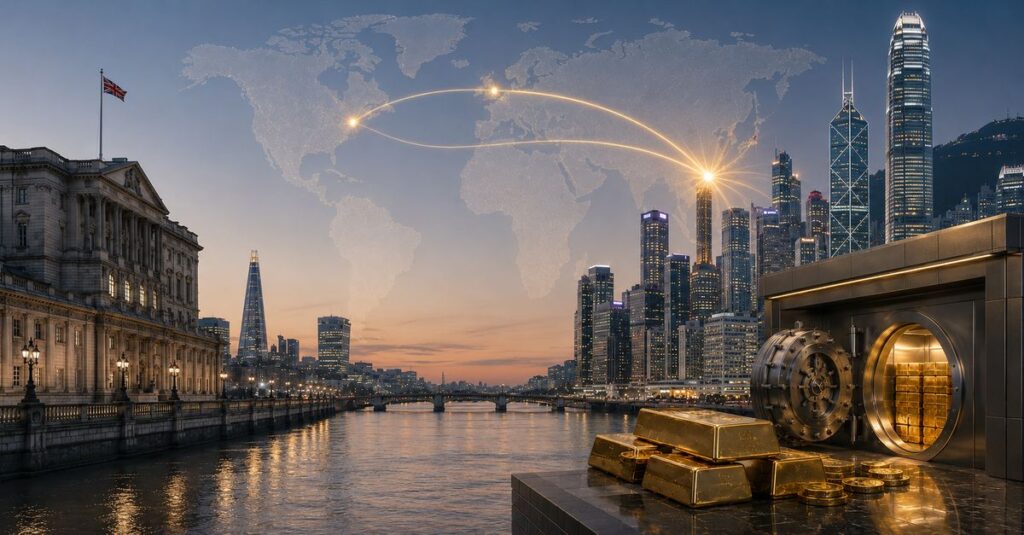
Gold still speaks London, but the next chapter may be written closer to China There is an old joke in commodity markets that gold never really moves. It merely changes whose vault it sits in. For decades, that joke contained an uncomfortable truth. The world could mine gold in Australia, refine it in Switzerland, sell it to a central bank in Asia and store it in London. The metal travelled thousands of miles, yet the centre of gravity never seemed to shift. The trade always found its way back to the same place. London became the gold market’s nervous system long before most modern financial centres existed. Its clearing infrastructure, vault network and institutional relationships created something remarkably durable: trust. Not trust in gold itself. Gold does not need trust. Trust in the machinery around it. What makes 2026 interesting is not simply that gold prices have surged again. Markets have spent centuries oscillating between enthusiasm and indifference towards the metal. What feels more consequential is that the infrastructure itself is beginning to move.
#7 Three Markets, One Message

Oil priced the interruption. Bonds priced the bill. Gold is pricing the loss of trust. There is an old hotel trick in cities under stress. When one room floods, guests are moved to another. When the wiring fails there, they are moved again. Nobody leaves the building. They simply keep changing floors, each move presented as a solution, each room carrying the same problem in a different form. That is how markets have behaved since the Iran conflict began in February. Capital has not found safety. It has rotated through discomfort. First into oil, then away from bonds, then out of gold, and finally back towards gold once the initial panic had passed. The supposed safe-haven trade became a revolving door. The obvious story is energy. The more consequential story is trust.
#6 The Limits of Financial Engineering
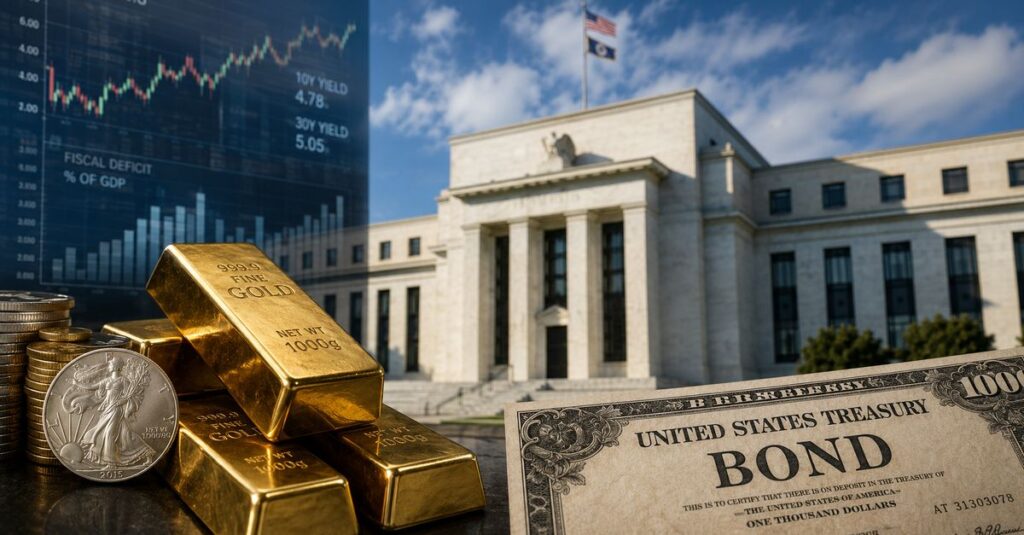
Kevin Warsh inherits an economy built on assumptions the bond market no longer believes. In 1979, when Paul Volcker arrived at the Federal Reserve, traders carried calculators the size of bricks and inflation expectations had already seeped into everyday life like cigarette smoke in a crowded bar. Americans rushed to buy appliances before prices rose again. Wage negotiations assumed inflation would continue climbing forever. Bond investors no longer trusted the dollar to preserve value over time. Volcker’s solution was brutal. He raised rates until parts of the economy snapped under the pressure. Farmers protested outside the Fed. Homebuilders mailed him two-by-fours in anger. Unemployment surged. Yet the market eventually believed him because he demonstrated something rare in modern politics: a willingness to tolerate pain. Kevin Warsh walks into a different version of the same room. The numbers are cleaner. The language is softer. But beneath the surface, the system feels strangely familiar. Inflation has returned. Treasury yields are climbing. Fiscal deficits are expanding during supposed periods of economic strength. And trust, the invisible scaffolding underneath every fiat system, has started to fray at the edges.
#5 When Empires Become Debtors
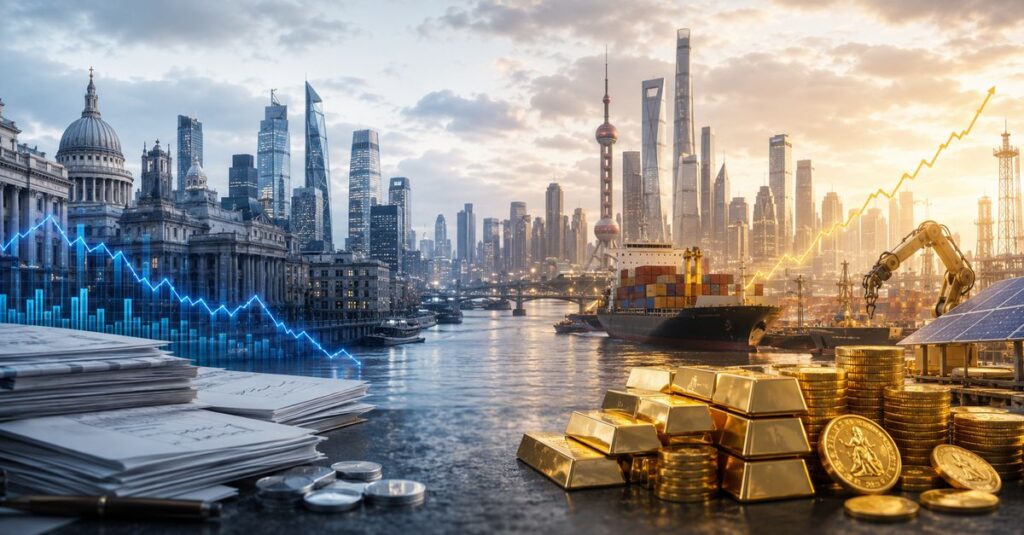
Why investors may be underestimating the balance sheet transition unfolding beneath the world economy. A shipping insurer in London once refused to cover a cargo fleet headed for South America in the late 1940s. Not because the ships were unsafe.
Not because the goods lacked demand. But because Britain itself was running out of money. The empire that had financed global trade for more than a century suddenly depended on foreign creditors, ration books, and dollar loans to maintain stability. Sterling still looked powerful on the surface. London was still London. But underneath, the balance sheet had changed. And when the balance sheet changes, power eventually follows. That is the part markets often miss. Economic dominance rarely disappears overnight. It erodes slowly through debt accumulation, external deficits, and declining productive capacity, long before headlines acknowledge the transition. The shift usually begins quietly inside bond markets, reserve flows, and national accounts before it becomes visible in geopolitics. Today, something similar may be happening again.
#4 The World Is Colliding with the Limits of Physical Supply

Modern industrial systems are accelerating into a future that depends on increasingly constrained precious metals. In the late stages of the Second World War, Allied planners became obsessed with something surprisingly small. Not tanks. Not oil. Not even ammunition. Ball bearings. Factories across Europe depended on them. Aircraft engines, trucks, rail systems, industrial machinery, all required precision bearings to function. They were small, unremarkable, and easy to ignore. But without them, production lines stalled and entire industrial systems began to seize. The lesson was uncomfortable. Modern economies do not usually break because of the obvious things. They break because of hidden dependencies buried deep inside the system. Today, the world is discovering another set of hidden dependencies. Not on ball bearings, but on precious metals. Most investors still think about gold and silver through a purely monetary lens. Gold protects against currency debasement. Silver is leveraged monetary beta. Platinum and palladium are often treated as niche industrial side stories. But that framing is becoming increasingly outdated.