
#23 Who Actually Sets the Gold Price?
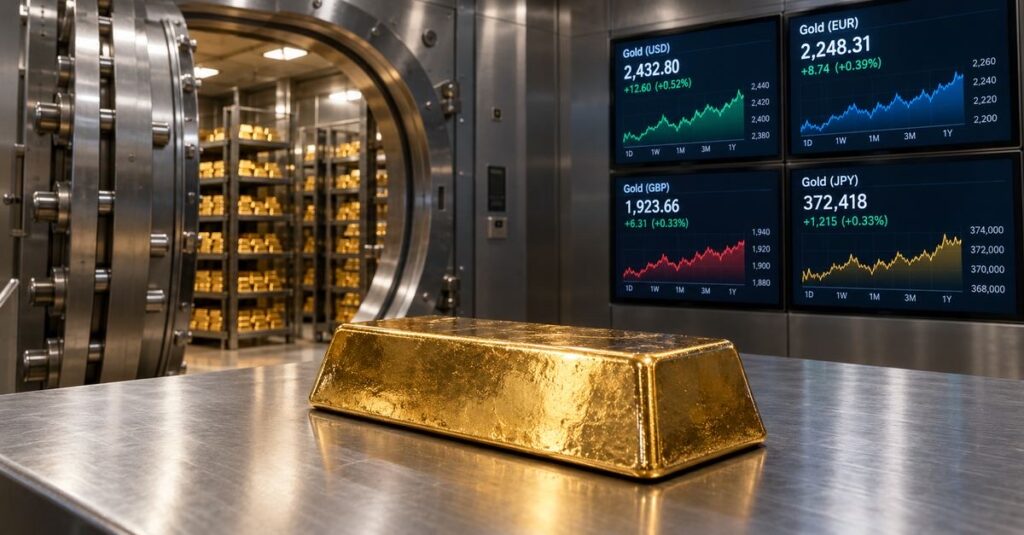
A gold bar can sit motionless in a London vault while billions of dollars decide what it is worth. Somewhere beneath London, a 12-kilogram gold bar is sitting in a vault.
It carries the stamp of an approved refiner and is worth hundreds of thousands of dollars. Somewhere else, a trader in New York is buying a futures contract representing 100 ounces of gold without ever expecting to see a bar. A bank in London is quoting a client a price for gold that will settle two business days later. An investor in Britain is ordering a one-ounce Britannia from a dealer at several percentage points above the number appearing on Bloomberg. All of them are trading gold. None of them is necessarily trading at exactly the same price. Ask which of them sets the gold price and none can quite claim it. There is no official sitting in London deciding that gold should be worth $4,000 an ounce. There is no single exchange with authority over the world market. London bullion, New York futures, institutional derivatives and physical metal trade alongside one another, tied together by arbitrage.
#22 The Silver Market Has a Seat Shortage
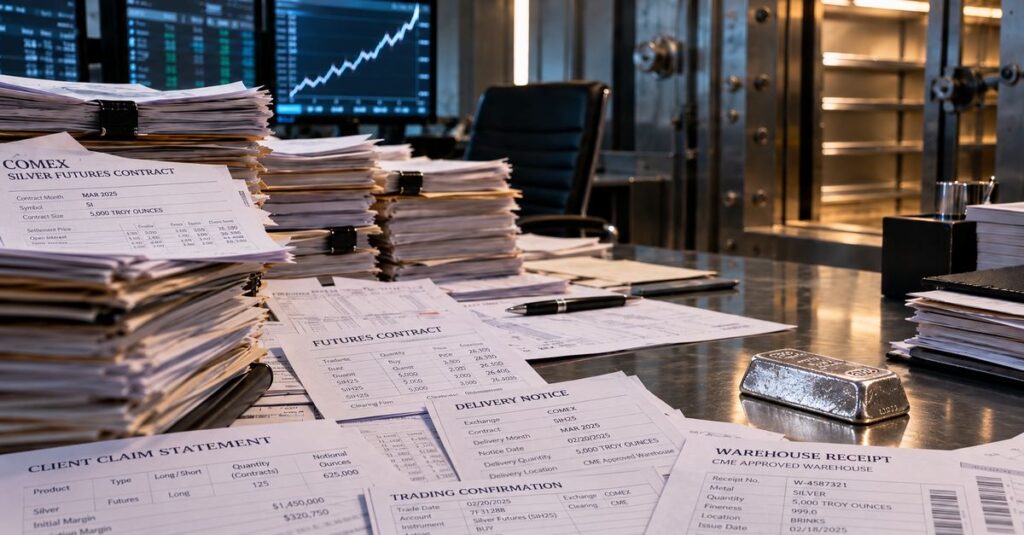
What happens when too many claims collide with limited supply. In the early 1900s, travelling theatres would sometimes oversell tickets intentionally. Owners understood a simple truth about human behaviour. Not everybody arrived at the same time. Some cancelled. Some arrived late. Others never showed up at all.
#21 The Slow Death of Money
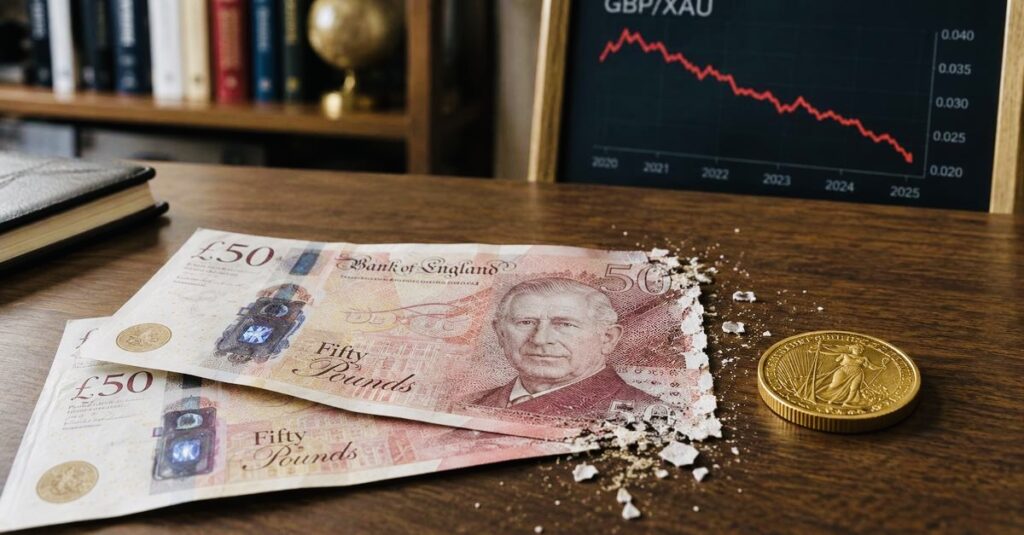
From hyperinflation at the extremes to the quieter erosion of sterling and the dollar, purchasing power keeps moving in one direction. By the final months of 2008, Zimbabweans had stopped behaving as though their national currency was money. The notes still existed. Prices were still quoted in Zimbabwe dollars. Salaries were still paid in them. Yet the useful life of those salaries was collapsing by the day. The IMF estimated twelve-month inflation at roughly 500 billion per cent by September. Businesses increasingly demanded US dollars or South African rand instead. Within months, much of the economy had abandoned the currency altogether.
#20 Bring the Gold Home

Europe’s central banks are reconsidering where their ultimate reserve asset should sit. In 1963, France began quietly emptying its gold from foreign vaults. The operation carried the appropriately French codename Vide-Gousset, roughly translated as “empty pockets”. Gold left New York aboard ocean liners. Bullion stored in London followed by aircraft. The operation stretched across several years because De Gaulle was doing more than moving metal between vaults. He was reducing France’s dependence on a monetary system he no longer entirely trusted. De Gaulle, guided by economist Jacques Rueff, had become suspicious of the arrangement created at Bretton Woods. The dollar was supposedly as good as gold, convertible by foreign central banks at $35 an ounce. Yet America could issue the reserve currency required by the rest of the world while running persistent deficits of its own.
#19 De-Dollarisation in Motion
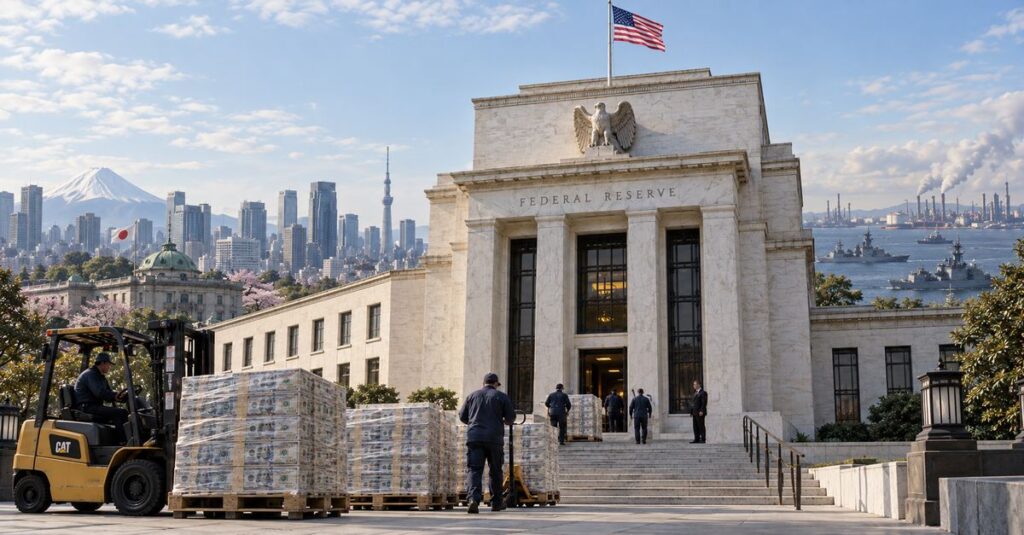
Washington is fighting across military, energy and financial fronts. The cost is beginning to appear where it matters most. In February 2022, Russia discovered that a foreign-exchange reserve is only as sovereign as the system holding it. For years, Moscow had accumulated hundreds of billions of dollars in reserves, partly as protection against financial pressure from the West. When Russian forces entered Ukraine, the United States and its allies froze a large portion of those assets.
For central banks elsewhere, the freezing of those reserves established a precedent that extended beyond Russia. A country could spend decades earning foreign currency, running trade surpluses and accumulating reserves, only to discover during a geopolitical confrontation that access to part of those savings depended upon decisions made in Washington, Brussels and other Western capitals.
For China, Saudi Arabia and other large reserve holders, the episode made the political conditions attached to foreign reserves considerably harder to ignore. Central banks continued accumulating gold while governments experimented with local-currency trade and payment systems requiring less Western financial infrastructure. Freezing Russia’s reserves demonstrated the reach of American financial power while giving other governments a reason to reduce their exposure to it. Four years later, Washington is applying the same financial leverage more aggressively against Iran. Scott Bessent is threatening to exclude institutions financing Tehran from the dollar system while America fights a Middle Eastern war, searches for petroleum in Venezuela and watches Japanese bond yields climb towards levels unseen for decades. At home, strategic reserves are being consumed while Treasury yields remain stubbornly high. There is nothing unusual about finding a separate explanation for each event. The pattern becomes harder to dismiss when they begin occurring at the same time.
Over the past few weeks, we have followed several of these pressures separately. What is becoming clearer is how quickly they are beginning to collide. This is what de-dollarisation looks like in motion.
#18 The Ounces Between Gold and Silver
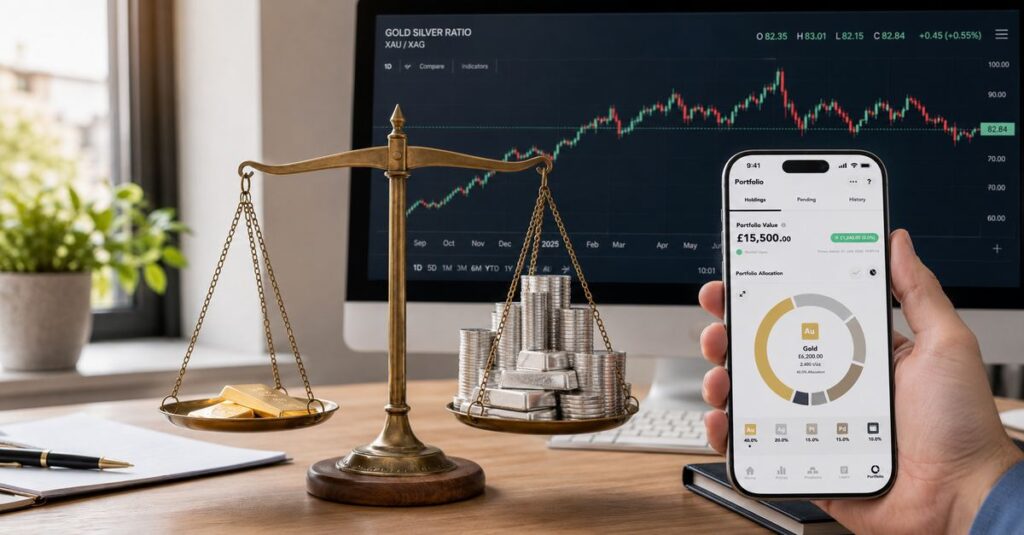
How movements in one of the oldest ratios in finance can potentially turn the same capital into more gold. Imagine two investors beginning with exactly the same thing: ten ounces of gold. The first puts his gold away and forgets about it. Twenty years later, he still owns ten ounces. The price may have risen considerably, but measured in gold, nothing has changed. The second watches the relationship between gold and silver. Gold becomes unusually expensive relative to silver, he exchanges part of his gold for silver. Years later, when silver has become expensive relative to gold, he switches back. Suppose the first exchange happens at a gold-silver ratio of 100 and the second at 50. Ten ounces of gold become 1,000 ounces of silver. Those 1,000 ounces later buy twenty ounces of gold. Both investors started with ten ounces. Neither contributed another pound. One still owns ten. The other owns twenty. There are transaction costs, taxes and the much harder problem of recognising the turning points. Markets rarely give examples this cleanly. But the math is useful. For an investor accumulating precious metals, wealth does not always have to be measured in currency. It can also be measured in ounces.
#17 Japan and the End of Easy Money
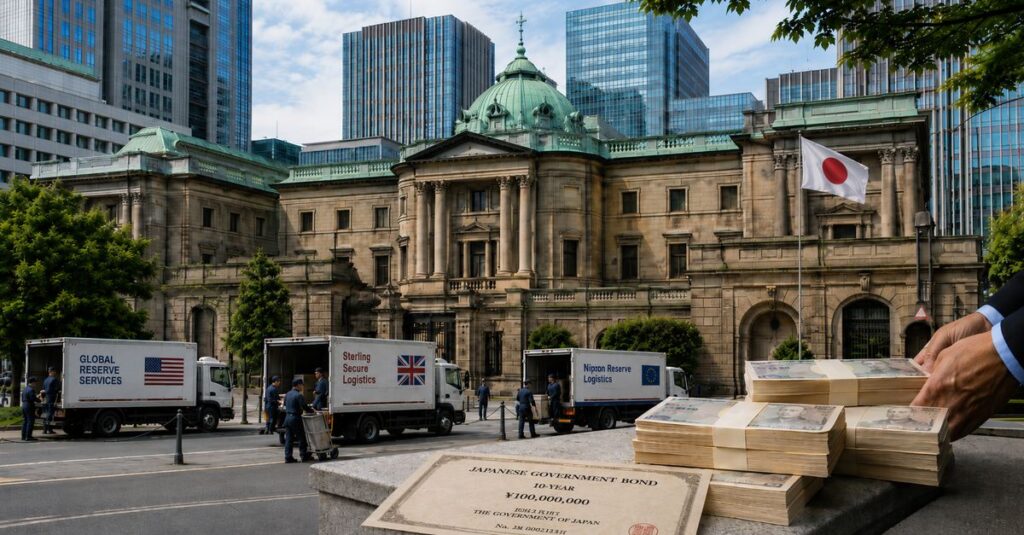
Rising Japanese yields are pulling at the cheap capital that flowed through global markets for decades. On the morning of 5 August 2024, one of the calmest assumptions in global finance suddenly became expensive. Japan’s Nikkei fell more than 12 per cent in a single session, its worst day since 1987. Markets from New York to London followed it lower. Investors who had spent years borrowing cheaply in yen scrambled to unwind positions. The Bank of Japan had raised interest rates by just 0.25 percentage points days earlier. In almost any other economy, that move would have been unremarkable. In Japan, after decades of near-zero rates, it disturbed something much larger. The yen had become one of the world’s great funding currencies, financing positions in American stocks, bonds, emerging markets and almost anything offering a better return than Japanese cash. August 2024 exposed how far Japan’s monetary experiment had travelled beyond its borders. Two years later, the pressure has moved from currencies and equities into the bond market. Japan’s 10-year government bond yield has approached 3 per cent, its highest since 1996, while the 30-year yield has moved above 4 per cent. Across the Pacific, the US 30-year Treasury has traded above 5.3 per cent, around levels last seen before the financial crisis. British long-dated gilts are pushing towards 6 per cent, while France and Germany are confronting their own rise in long-term borrowing costs. One country can be blamed on fiscal incompetence. Two can be dismissed as coincidence. It becomes harder to make that argument when the same pressure appears across most of the developed world. Long-term money is becoming more expensive almost everywhere.
#16 The Dollar’s Long Goodbye
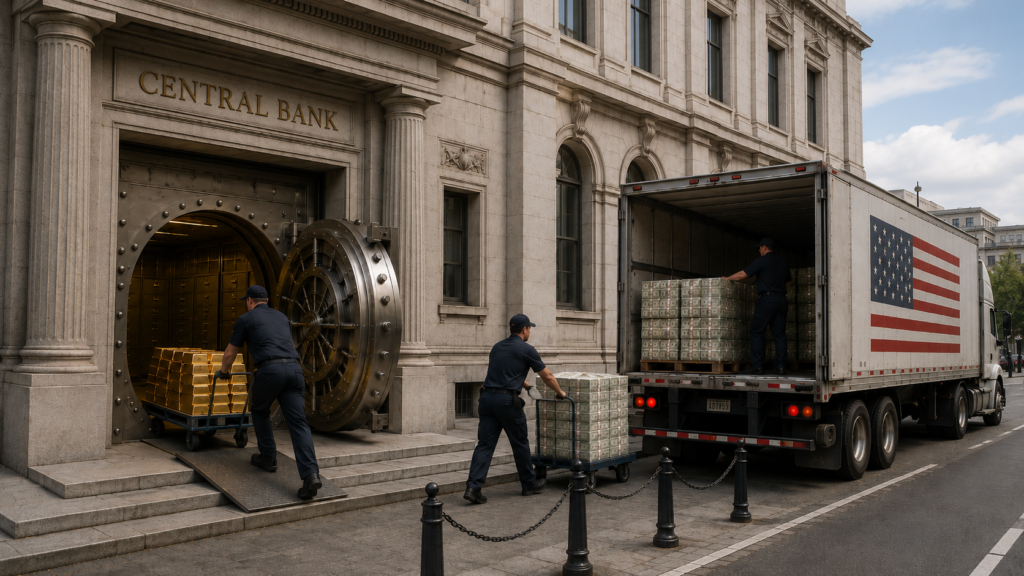
The Dollar’s Long Goodbye. Gold needs no dollar collapse, only a world that trusts American promises a little less. In August 1971, Richard Nixon appeared on American television on a Sunday evening and told the country he was temporarily suspending the dollar’s convertibility into gold. The language was deliberately reassuring. There would be no great monetary rupture, merely a technical adjustment designed to protect the dollar from international speculators. The temporary suspension never ended. Foreign governments holding dollars could no longer exchange them for American gold. The Bretton Woods monetary system effectively died that evening, although the dollar survived and eventually became more dominant than before. What disappeared was the constraint beneath it. Money had become a promise backed primarily by confidence in the United States. More than half a century later, that promise remains the foundation of global finance. Yet the behaviour of governments suggests they are becoming less comfortable relying upon it indefinitely. Central banks have been accumulating gold at historically elevated rates. China has spent years reducing its relative exposure to US Treasuries while increasing its official gold reserves. BRICS governments openly discuss conducting more trade outside the dollar. Across emerging markets, the question is no longer whether the dollar disappears tomorrow. It is whether a monetary system built overwhelmingly around one country’s liabilities still makes sense in a world becoming progressively less American. Ray Dalio has spent years arguing that these moments are not unusual. They are cyclical. And America is entering the uncomfortable part.
#15 Gold Never Changed. Everything Around It Did.
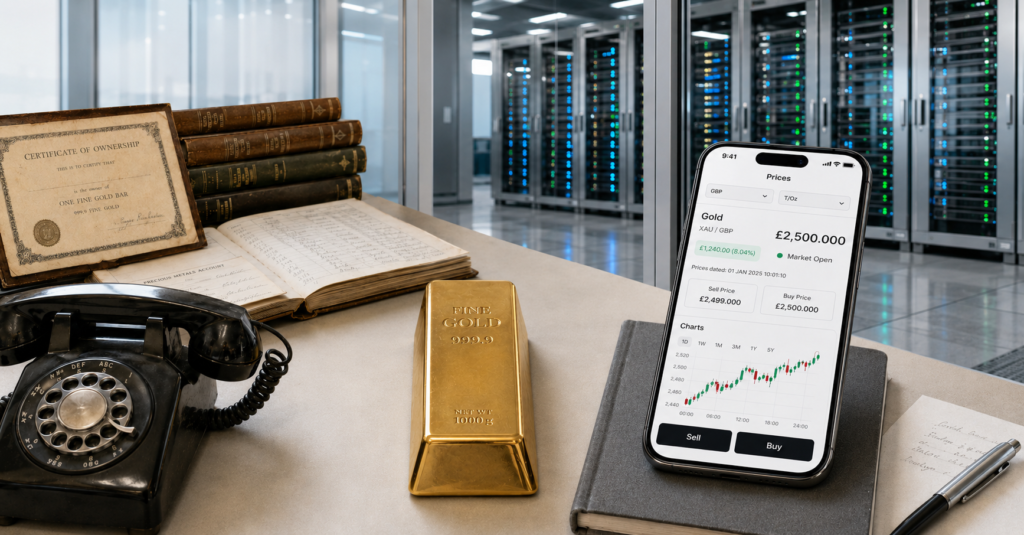
Technology has transformed the way we buy, store and trade gold. Ownership remains the part investors value most. For most of financial history, buying gold required almost as much trust as buying a house. An investor telephoned a broker, accepted whatever price was available, signed paperwork that arrived days later and waited. Settlement drifted along at the pace of postal services, banking systems and administration. By the time ownership was confirmed, the market had often moved several times. Nobody found this unusual because there was nothing to compare it with. Markets moved slowly because the world moved slowly. Looking back, what stands out is not the inefficiency. It is the uncertainty. Gold was bought because it represented permanence, yet acquiring it relied on a chain of intermediaries that few investors ever saw. The transaction finished only when everyone else had done their part. Those frictions disappeared slowly, then all at once. Telephone dealing became online execution. Paper certificates disappeared behind digital account statements. Live pricing replaced yesterday’s quotes. Investors stopped measuring settlement in weeks and started measuring it in minutes. The mechanics changed beyond recognition. The reason for buying gold barely changed at all. People were still looking for ownership of an asset that existed independently of somebody else’s balance sheet.
#14 The Metal Behind the Missile

Modern warfare is fought on the battlefield, but it is won in the factory. Gold and silver reveal why. When historians write about wars, they usually begin with armies.
Battles, generals and political decisions dominate the narrative. Maps fill with arrows. Casualties are counted. Victories and defeats become fixed points in history.
The factories are often reduced to a footnote. Yet wars have always been fought twice. Once on the battlefield, and again hundreds of miles away inside steel mills, refineries, machine shops and mines. The first contest determines who wins today. The second determines who can still fight tomorrow. The battlefield consumes. Industry replaces. Every prolonged conflict eventually reaches the point where those two forces collide. Stockpiles shrink faster than production. Supply chains that once appeared limitless begin to fray. Governments discover that armies move only as fast as industry allows. The Second World War offered countless examples of this quiet arithmetic, but one stands apart.
In 1942, engineers working on the Manhattan Project requested copper for the enormous electromagnetic coils needed to separate uranium isotopes. Washington declined. Copper had already been committed elsewhere, flowing into ships, aircraft, communications equipment and ammunition destined for a world at war. The Treasury offered silver instead.