
#3 Your Bank Balance Is Lying to You

Nominal gains are rising, but real wealth across the UK is quietly shrinking. In the mid-1970s, Britain appeared—at least on paper—to be getting richer. Wages were rising, interest rates were high, and savers could open their passbooks and see their balances steadily increasing. It gave the impression of progress. More pounds in your account felt like more security, more stability, and more wealth. But the reality inside British households told a very different story. By 1975, UK inflation had surged to 24.2%, while Bank Rate sat closer to 10–11.5%. That meant even though savers were earning interest, and workers were receiving pay rises, the cost of living was rising far faster than their income or savings. Food, fuel, housing—everything was becoming more expensive at a pace that outstripped financial gains. This created what can only be described as a financial illusion. People were earning more, saving more, and yet falling behind. Their money was growing in number, but shrinking in value. That same illusion is quietly re-emerging today.
#2 The Next Phase of Money

Gold Moves When the Rules Change. From Sutter’s Mill to digital currencies, this is the story of how monetary systems evolve and where trust moves next. On 24 January 1848, at Sutter’s Mill in California, James Marshall found gold in the South Fork of the American River. Within months, the discovery triggered one of the largest migrations in modern history. Hundreds of thousands of people moved west, not in search of wages or opportunity in the modern sense, but in search of something far more fundamental. They were searching for money itself. Gold did not need to be issued, verified, or authorised. It could be held, traded, and recognised anywhere. That was its power. Not speed or convenience, but finality. When a transaction was settled in gold, it was complete. No third party was required, and no system needed to remain operational for it to retain value. At the same time, the United States was formalising this reality into law. The Coinage Act of 1834 adjusted the gold content of U.S. coin, the Mint Act of 1837 standardised it, and by 1900 the Gold Standard Act defined the dollar explicitly in terms of gold. The result was a system where money was anchored to something scarce, with an official parity of roughly $20.67 per ounce. From 1834 to 1933, this framework imposed discipline. Governments and banks could expand credit, but they remained tied to an external constraint. Money could not be created without limit because it ultimately had to reconcile back to gold. But that constraint came with a cost.
#1 The Fault Line Beneath the Economy

As debt, war, and energy strain the system, gold has re-emerged as a foundation of financial security. When Pressure Builds Beneath the Surface. For years, a city can sit quietly above a fault line. Streets remain busy, buildings stand firm, and daily life carries on as if nothing is wrong. Shops open each morning, traffic flows, and people plan for the future with confidence. Yet far below ground, pressure is steadily building. Tiny shifts occur deep beneath the surface, unnoticed and unreported. The structure above appears stable, but its foundations are quietly being tested. When movement finally comes, it feels sudden. It looks like chaos. But it is not random. It is the release of forces that have been accumulating over time, following a pattern that was always there, even if it went unseen. That is where we are now. What many people are reacting to today is surface-level noise. Volatility. Contradictory signals. But beneath that, the system is not behaving unpredictably. It is responding to pressure in a way that is structured and, in many ways, inevitable. The shift is not new. It is simply becoming visible.
Trading Periods & Order Types on Goldwise

Goldwise is designed to give continuous access to physical precious metals markets, with 24/7 trading supported by a structured approach to pricing, execution, and order behaviour.
Fractional vs Bars vs Coins
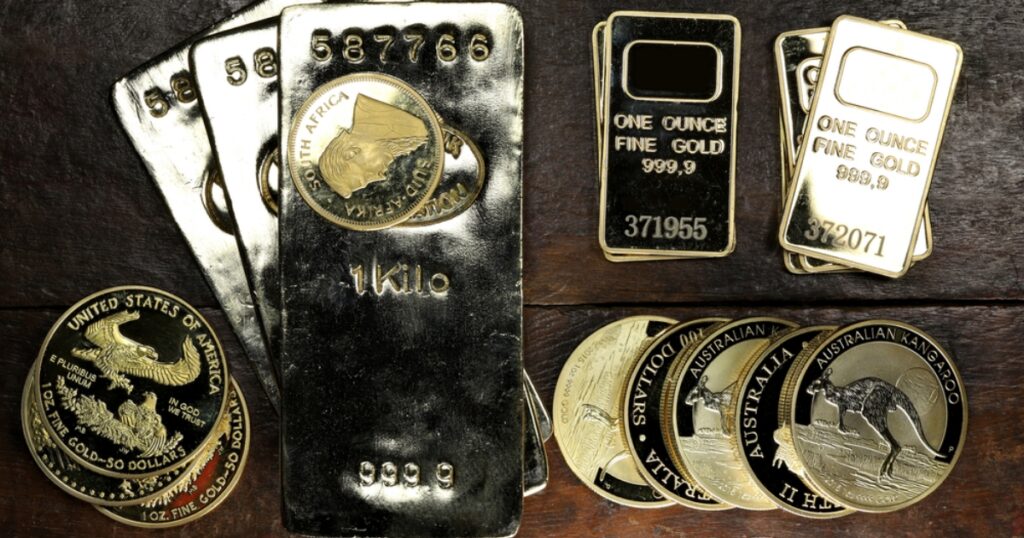
Physical precious metals can be accessed in three primary formats: fractional bars, coins and full bars.
All three provide exposure to the same underlying asset — investment-grade bullion — but differ materially in cost, flexibility, liquidity and tax treatment.
Physical Precious Metals vs Derivatives (ETC/ETF/Token)

Investors can gain exposure to precious metals in two main ways: physical ownership or through derivative products.While both track the price of metals, they differ significantly in terms of ownership, risk, costs and how they are operate.
Why Precious Metals
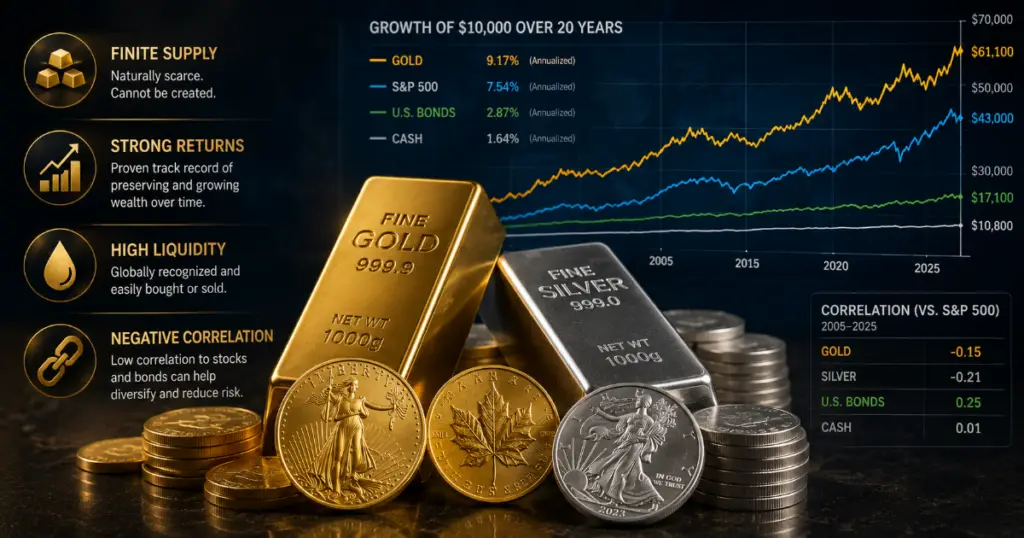
There are 4 main benefits to having precious metals and in particular Gold within your portfolio or as a long-term alternative to cash saving.
14 Key Things to Know When Investing in Physical Precious Metals

Trading physical precious metals can be confusing and complex, here are the main things you need to think about when investing in them:
Keeping Your Account, Funds and Assets Secure

Goldwise uses regulated payment partners, institutional trading infrastructure and professional vault storage to help keep your money and precious metals safe.
Our Comprehensive Guide to Investing in Precious Metals | 🇬🇧 UK Edition

Understand how to buy, store and sell gold, silver and other precious metals — including pricing, fees, tax and platform differences.
Written by precious metals experts to help you understand the key decisions, costs and trade-offs — so you can invest wisely.